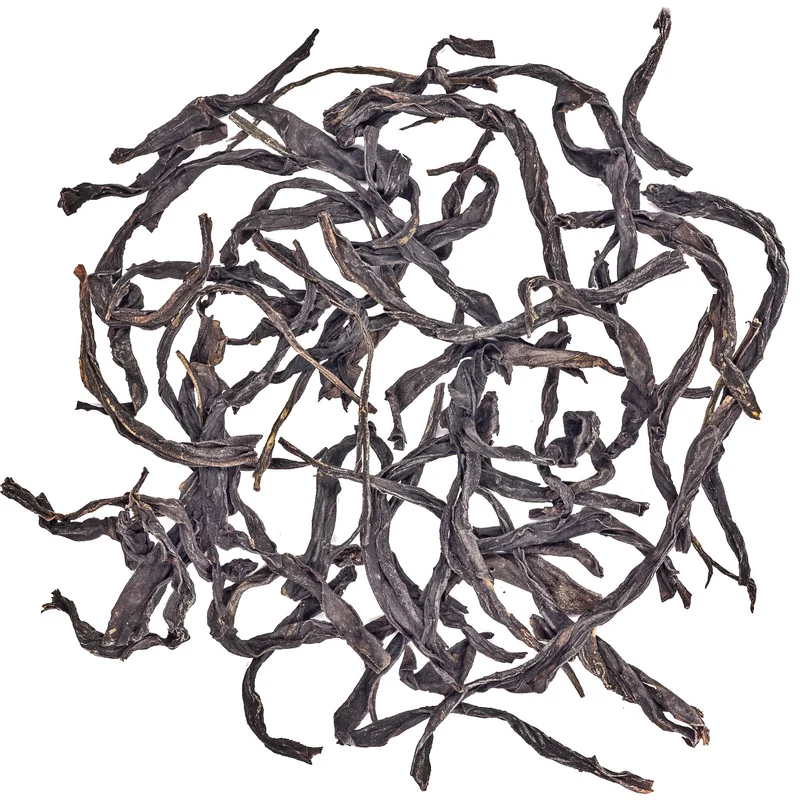
Aromatic Type Map of Dancong (香型, xiāngxíng)
Fenghuang dancong (fènghuáng dāncōng, 鳳凰單叢) are oolongs from Mount Fenghuang in Guangdong, customarily distinguished not by leaf shape or factory, but above all by aroma. The established system of aromatic types (xiāngxíng, 香型) serves as the main navigational key to hundreds of historical bushes and dozens of market names such as 通天香, 夜來香, and 八仙.
Why Dancong Needs Its Own Aroma Map
In most tea categories, the variety is defined by cultivar and region. For Fenghuang dancong, a different principle has historically been at work: individual old trees (hence 單叢 — “single bush”) were selected by masters based on the character of the finished tea, and a corpus of named bushes accumulated over decades. To bring order to this corpus, a resource survey was conducted in 1996 under the leadership of Dai Suxian (South China Agricultural University), which formalised the division into ten major aromatic types (十大香型). This framework underpins both academic atlases and commercial catalogues.
It is important to note right away a phenomenon characteristic of dancong: 同名異物 / 異物同名 — “one name for different bushes” and “different names for the same bush.” Therefore, 香型 is not a rigid botanical classification but a descriptive map based on the dominant aroma; a single strain may appear in different types under closely related names.
The Ten Canonical Types
The ten major types formalised by the 1996 survey are oriented around floral, fruity, and spicy benchmarks:
- 黃栀香 (huángzhīxiāng) — gardenia;
- 芝蘭香 (zhīlánxiāng) — orchid;
- 蜜蘭香 (mìlánxiāng) — honey-orchid;
- 桂花香 (guìhuāxiāng) — osmanthus;
- 玉蘭香 (yùlánxiāng) — magnolia;
- 薑花香 (jiānghuāxiāng) — ginger flower;
- 夜來香 (yèláixiāng) — tuberose;
- 茉莉香 (mòlìxiāng) — jasmine;
- 杏仁香 (xìngrénxiāng) — almond;
- 肉桂香 (ròuguìxiāng) — cinnamon.
Alongside these exists a layer of secondary types: 柚花香 (pomelo flower), 橙花香 (orange flower), 楊梅香 (bayberry), 附子香, 黃茶香, as well as 苦種 (“bitter cultivar”) and others. These categories are needed to accommodate bushes whose profiles cannot be reduced to the ten benchmarks.
姜花香 — “ginger flower”
姜花香 (romanised in scientific literature as Jianghua Xiang) is one of the ten aromatic types listed by the 2021 group standard on the naming of Fenghuang dancong (T/CZTTBZ 002-2021). The geographical indication standard DB4451/T 1-2021 cites 姜花香 among the example names that the finished oolong receives for the character of its natural floral aroma. The name describes the aroma, not the ingredients: by the definition in the naming standard, a 香型 is an oolong made from cultivars and lines of 凤凰水仙 by traditional processing, with a natural floral (fruity) aroma that gives the finished tea its name.
The table of bushes in the annex to the quality grading standard T/CZTTBZ 001-2021 (taken from the reference book “潮州茶叶”, 2009) describes the type as follows: the aroma of the finished tea resembles 姜花 (“ginger flower”), and the taste combines sweetness and freshness with a slight ginger pungency. The Flora of China gives the name 姜花 to Hedychium coronarium of the ginger family, a plant with white fragrant flowers; the standard and the reference book do not specify which plant they mean.
The 姜花香 section of this table lists five bushes; elevation and age are given as of 2009:
- 姜花香 (also known as 姜母香 and 通天香) — village 凤西中坪村, elevation about 900 m, more than 200 years old; one of the famous bushes (名丛). The name 姜花香 refers to the aroma, 姜母香 to the slight ginger pungency in the taste.
- 姜母香 — village 凤北官头輋村, elevation 1000 m, 100 years old; named for its light aroma resembling 姜花 and its ginger taste.
- 通天香 — village 凤西大庵村, elevation about 1150 m, more than 300 years old; so named because during brewing its aroma “drifts on the wind and fills the whole house”.
- 李仔坪姜花香 — village 乌岽李仔坪村, elevation about 1148 m, 140 years old.
- 坑墘姜花香 — village 凤溪坑墘村, elevation about 630 m, 50 years old.
The names 通天香 and 姜母香 are double here: each is both the second name of the bush from 中坪 and the name of a separate tree in another village. This is a particular case of 同名異物, so neither 通天香 nor 姜母香 should be taken as a synonym for the whole type.
The table does not exhaust the type: a 2025 scientific article calls JiangHuaXiang a common aroma category that includes several varieties, and assigns to it two that are absent from the table — XiaPuJiangXiang and NanJiangXiang.
The Map in Figures: How the Registry Is Structured
The scale of the system is clearly visible from the structure of the reference corpora. In Chen Shaoping’s “Atlas” (《中國鳳凰單叢茶圖譜》), sections 3.1–3.17 provide exactly 214 “most representative dancong,” while section 3.18 (增录) adds a further 11 — a total of 225 entries. The illustrated passports in the chapter “名丛图文” of the monograph 《凤凰单丛》 (2020) distribute the same 225 bushes across 18 sections as follows:
- 黄栀香 — 71 bushes;
- 芝兰香 — 38;
- 其他清香 (“other light aromas”) — 47;
- 桂花香 — 9; 杏仁香 — 6; 蜜兰香 — 5; 姜花香 — 5;
- 玉兰香 — 4; 肉桂香 — 4; 夜来香 — 4; 柚花香 — 4; 附子香 — 4; 黄茶香 — 4; 苦种茶 — 4;
- 杨梅香 — 2; 茉莉花香 — 2; 橙花香 — 1;
- 增录 — 11.
The key takeaway from this breakdown is that the types 黃栀香 (gardenia) and 芝蘭香 (orchid) dominate numerically, whereas, for instance, 橙花香 is represented by a single bush. In other words, the “ten types” are unequal in volume, and the extensive category 其他清香 openly acknowledges that some historical bushes do not fit within the canonical ten.
Each bush passport is described according to a unified set of fields: 香型 (type) / 单丛名·别名 (name and synonyms) / 株系 (strain) / 树龄 (age) / 海拔 (elevation above sea level) / 产地村·管理人 (village and caretaker) / 特征特性, 树高·树幅, 成叶·叶色, 春茶采期 (spring harvest period), 单株春产干茶 (dry tea yield per tree), 品质特点 (sensory profile). For 32 distinguished 名丛, chemical composition is also provided: 茶多酚 (polyphenols), 咖啡碱 (caffeine), 氨基酸 (amino acids), 水浸出物 (extractive substances).
Landmark Names on the Map
夜來香 (yèláixiāng, tuberose) is not a single bush but a full-fledged aromatic type, with 4 passports assigned to it in the registry. The reference point is the nocturnal, sweet-floral aroma of tuberose; the name belongs to the group of names “by aroma.” In Russian-language sources the name is rendered as “Е Лай Сян” (Ye Lai Xiang). The Chaozhou municipal geographical indication standard DB4451/T 1-2021 (clause 3.1) lists 夜来香 among the examples of names that finished Fenghuang dancong takes from its natural floral (fruity) aroma, and the group naming standard T/CZTTBZ 002-2021 (clause 3.2) includes it among the “ten major types” (十大香型). The standards do not say which flower is meant, and in China the name 夜来香 itself is applied to different plants: in the Flora of China it is Telosma cordata (family Asclepiadaceae), while a 2002 article in the journal 中草药 uses it for Cestrum nocturnum; the translation “tuberose” is therefore a convention.
八仙 (bāxiān, “Eight Immortals”) is a well-known market name that alludes to a Daoist cultural motif; by naming principles, this is an example of a cultural allusion. On the 香型 map, such names are positioned according to their dominant aroma rather than their legend.
通天香 (tōngtiānxiāng) is another prominent trade name from the “by aroma” series (literally “aroma reaching the heavens”), regularly encountered on the market.
鸭屎香 (yāshǐxiāng) is a telling case of unstable nomenclature: in the monograph, the bush appears under the name 鸭屎香, while in the illustrated scanned passport it is listed as 鸭屎单丛 within the 杏仁香 section (almond type, position 3.5.4). This vividly illustrates how a single tree can be labelled differently in different publications.
When cross-referencing the two corpora, 217 out of 225 names matched; some discrepancies are purely orthographic (黄栀香 versus 黄枝香 for the same type) or involve descriptive synonyms (for example, 宋种黄枝香 ↔ 乌岽宋茶 / 东方红).
The Logic of Names
Understanding naming principles helps in reading the map. Bushes are named: by aroma (夜來香, 通天香), by infusion taste, by leaf shape, by bush and crown shape, by the appearance of the finished tea, by place of growth, by era or event, by cultural allusions (八仙), with borrowings from the worlds of animals and objects, as well as by compound names (复式命名). The same strain may therefore appear in a catalogue under several names.
Taste and Brewing
Within the 香型 map, the common foundation for all dancong is defined by its processing as an oolong — partial fermentation through 做青 (shaking and withering of the green leaf) followed by roasting (焙火). On this base, each type anchors a recognisable aromatic dominant: 黃栀香 — composed-gardenia, 芝蘭香 — high-orchid, 夜來香 — nocturnal sweet-floral, 杏仁香 — almond-stone-fruit. Dancong are characterised by the so-called mountain note (山韵) of old plantings and a long aftertaste (回甘).
In practice, dancong reveal themselves best with a dense leaf load and short infusions in a small vessel with hot water: this is precisely how aroma layers are successively drawn out, while the degree of roast and the age of the bush manifest themselves in the fullness of body and persistence.
How to Distinguish in Practice
- First, look at the 香型, not the decorative name: the type provides the aromatic reference point, whereas names such as 八仙 or 通天香 may refer to different bushes.
- Bear 同名異物 in mind: a matching name does not guarantee matching raw material; verify the strain (株系), village of origin, and harvest period.
- For academic reliability, rely on the core sources — Chen Shaoping’s 《中國鳳凰單叢茶圖譜》, 《潮州鳳凰茶樹資源志》, and the monograph 《凤凰单丛》; use forums and vendor displays only with a verification note.
- Be aware of orthographic variants (栀/枝) and descriptive synonyms — this is a normal feature of the publications, not an indication of different teas.
Summary
The 香型 map is a historically evolved language, systematised in 1996, that Mount Fenghuang uses to describe its teas. The ten major types set the reference points, secondary categories and the 其他清香 section accommodate everything else, and prominent names — 夜來香, 通天香, 八仙, 鸭屎香 — only acquire meaning once we know which aroma and which specific bush they refer to.
Sources
Full list — on the Sources page