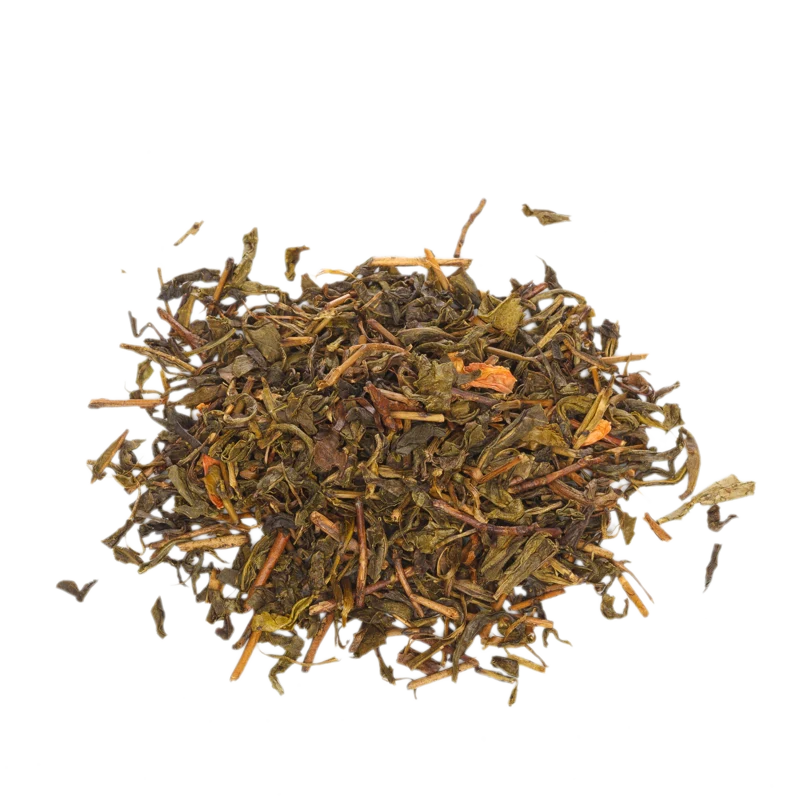
- Definition: Jasmine tea is a type of scented tea obtained by blending tea leaves (usually green tea, but also white, oolong, or black tea) with jasmine flowers (Jasminum spp.) so that the tea leaves absorb the natural fragrance of jasmine. Traditionally, green tea is used as the base for producing jasmine tea. Jasmine tea is known for its delicate floral jasmine aroma, refreshing and slightly sweet taste, and relaxing effect. It is one of the most popular and widely consumed scented teas in the world, especially in China and Asia.
- Alternative names: Mòlìhuā chá (Chinese pinyin), Jasmine Tea, Jasmine Green Tea (if the base is green tea), Jasmine White Tea (if the base is white tea), etc., Jasmine Pearl Tea (one of the forms), Thé au Jasmin (French), Jasmintee (German), Té de Jazmín (Spanish), Gelsomino (Italian).
- Classification: Scented tea, green tea (most often, but can be white, oolong, or black tea), Chinese tea (primary origin), floral tea, caffeinated tea (depending on the base, usually contains caffeine).
- Etymology: The name “jasmine tea” comes from the jasmine flowers used to scent the tea. The Chinese name 茉莉花茶 (Mòlìhuā chá) literally means “jasmine flower tea,” where 茉莉花 (mòlìhuā) is jasmine, and 茶 (chá) is tea. Jasmine (茉莉 - mòlì) in Chinese has Buddhist roots, and the word probably derives from the Sanskrit “mallikā”.
2. Origin and History
- Origin: Although the tea plant (Camellia sinensis) is native to China, jasmine (Jasminum spp.) was introduced to China from South Asia, likely via India, during the Han dynasty (206 BCE – 220 CE). However, the practice of scenting tea with jasmine is believed to have begun developing in China during the Song dynasty (960–1279 CE), and became popular during the Ming dynasty (1368–1644 CE).
- Ming Dynasty and the Rise of Jasmine Tea: In the Ming era, when scented teas became more popular, jasmine tea gained particular renown. It was believed that Ming dynasty emperors especially loved jasmine tea. It was during this period that scenting methods were refined, and jasmine tea became a symbol of refinement and luxury. Jasmine tea production became an important branch of China’s tea industry.
- Production Regions: Traditionally, the main regions for jasmine tea production in China were Fujian, Guangdong, Guangxi, Jiangsu, and Zhejiang. Fuzhou, the capital of Fujian province, is historically considered the “capital of jasmine tea”, and still is renowned for its high-quality jasmine teas. These regions have a favorable climate for growing both the tea plant and jasmine.
- Development of Scenting Technology: Over time, jasmine scenting technologies were perfected, becoming increasingly complex and refined. The traditional scenting method, repeated mixing and separation of tea leaves and jasmine flowers, required great skill and manual labor. Modern production may combine traditional and contemporary methods to ensure consistent quality and meet growing demand.
- Global Popularity: Jasmine tea spread beyond China and gained worldwide popularity. It became a favorite beverage in many countries of Asia, Europe, and the Americas. Jasmine tea is valued for its unique aroma, refreshing taste, and relaxing properties, and is an important part of global tea culture.
3. Botanical Source
-
Tea Plant (Camellia sinensis): The base for jasmine tea consists of leaves from the tea plant (Camellia sinensis). As with green tea, Camellia sinensis var. sinensis, the Chinese variety of the tea plant, is usually used for jasmine tea because of its delicate and refined taste, which pairs well with the floral aroma of jasmine. The type of tea leaf (green, white, oolong, black) determines the primary type of jasmine tea. The quality of the tea leaf also influences the overall quality of jasmine tea.
-
Jasmine Flower (Jasminum spp.*): Flowers of the jasmine genus Jasminum are used to scent jasmine tea. Several jasmine species can be used for scenting, but the most common and valued are:
-
Jasminum sambac (Arabian jasmine): The most commonly used jasmine species for producing jasmine tea. Jasminum sambac is valued for its intense, sweet, and intoxicating aroma, which is ideal for scenting tea. There are **various cultivars of **Jasminum sambac, such as “Maid of Orleans,” “Grand Duke of Tuscany,” “Belle of India”, which may be used for scenting tea and may differ in aroma nuances.
- Jasminum officinale (Common jasmine): Also used for scenting, but **less common than **Jasminum sambac. Jasminum officinale has a more delicate, sweet, and less intense aroma than Jasminum sambac.
-
Characteristics of Jasmine Flower for Scenting:
-
Aroma (Intense, sweet, floral): The aroma of jasmine is the key element of jasmine tea. The best jasmine varieties for scenting possess an intense, sweet, floral, and intoxicating aroma that transfers well to the tea leaves. The intensity and quality of jasmine aroma depend on the species, cultivar, maturity of the flowers, and growing conditions.
- Harvest Time (Night): Jasmine flowers are harvested at night or early in the morning, before sunrise, when the flowers are just beginning to open and possess the most intense aroma. During the day, the jasmine aroma weakens, so night harvesting is critically important for obtaining high-quality scented tea.
- Flower Maturity (Buds and half-open flowers): Jasmine buds or half-open flowers that are at the peak of their aroma are used for scenting. Fully open flowers may lose part of their aroma. Harvesting at the right stage of maturity is an art requiring experience and attention.
(Image of jasmine flowers (Jasminum sambac), showing white jasmine flowers and buds, highlighting the source of aroma, demonstrating the beauty and fragrance of jasmine flowers)
4. Production Process (Traditional and Modern)
The production of jasmine tea is a labor-intensive and multi-stage process, requiring skill, experience, and attention to detail. The main process involves scenting tea leaves with fresh jasmine flowers:
-
Preparation of Tea Leaves (Base):
-
Selection of Tea Base (Usually green tea): Green tea is the most common base for jasmine tea, as its delicate and fresh taste pairs well with the floral aroma of jasmine and does not overpower it. Different types of green tea can be used as the base, from simpler to more premium, depending on the desired quality of the final product. White tea, oolong, or black tea can also be used as the base, creating different types of jasmine tea with unique characteristics.
- Preparation of Tea Base (Drying and storage): Tea leaves intended for scenting are usually pre-processed (for example, fixation for green tea, oxidation for black tea) and dried. The moisture content of the tea leaves must be carefully controlled so that they can effectively absorb the jasmine aroma. Tea leaves are stored until the start of the jasmine scenting season.
-
Harvesting Jasmine Flowers (Night harvest):
-
Harvest Time (Summer months, night): Jasmine flowers are usually harvested in summer, during their blooming period (usually from June to August). Harvesting is done at night or early in the morning, before sunrise, when the flowers are in the bud or half-open stage and possess the most intense aroma. Night harvesting is a critically important stage for producing high-quality jasmine tea.
- Flower Selection (Buds and half-open): Only selected jasmine buds and half-open flowers at the peak of their aroma are collected. Damaged or fully open flowers are discarded. Careful flower selection is key to high-quality scenting.
-
Scenting: The heart of jasmine tea production is scenting the tea leaves with jasmine flowers. The traditional scenting method is repeated mixing and separation (up to 6-7 times or more for high-quality tea), which can take several days or even weeks. The main stages of traditional scenting:
- Mixing (Layering): In a cool, well-ventilated room, tea leaves and freshly picked jasmine flowers are mixed in layers. Usually layers alternate: a layer of tea leaves, a layer of jasmine flowers, and so on. The ratio of tea to flowers varies depending on the desired intensity of aroma and tea quality, but is usually from 1:1 to 1:3 (flowers to tea) by weight per scenting cycle. The quality and freshness of the jasmine flowers, as well as the quality of the tea base, are crucial for successful scenting.
- Holding (Withering/Absorption): The mixture of tea leaves and jasmine flowers is held for several hours (usually 4-8 hours) overnight. During this time, the jasmine flowers “release” their aroma to the tea leaves. Tea leaves are hygroscopic and actively absorb the essential oils and aromatic compounds emitted by the jasmine flowers. It is important to control the temperature, humidity, and ventilation of the room during holding to ensure optimal scenting and prevent overheating or spoilage of the mixture. During the night, the mixture is periodically turned to ensure even scenting.
- Separation (Separation/Sifting): In the morning, after the scenting cycle is complete, the jasmine flowers are separated from the tea leaves. Traditionally, the flowers are removed by hand or the mixture is sifted through a sieve. Removing the flowers is important because leftover flowers may mold or spoil the taste of the tea. For high-quality jasmine tea, only the tea leaves infused with aroma are used, while the flowers themselves are removed. Some jasmine tea varieties may contain a small amount of dried jasmine flowers for decorative effect, but they no longer participate in scenting.
- Repeated Scenting: To obtain high-quality jasmine tea, the cycle of mixing, holding, and separation is repeated several times (from 3 to 7 or more times). Each scenting cycle intensifies the jasmine aroma in the tea leaves. The number of scenting cycles is one of the key factors determining the quality and price of jasmine tea. A higher number of scenting cycles means a more intense and lasting jasmine aroma, but also requires more time, labor, and use of fresh jasmine flowers. Each scenting cycle uses new fresh jasmine flowers.
-
Drying (Drying/Firing): After the scenting process is complete, the tea leaves undergo light drying or “firing” (often called “firing”) to reduce moisture to an optimal level, fix the aroma, and improve storage. Drying must be very delicate so as not to “over-fire” the tea or damage the jasmine aroma. Temperature and drying time are carefully controlled.
-
Grading and Packaging: The dried jasmine tea is sorted by quality, leaf size, and appearance. High-quality jasmine tea consists of whole, undamaged leaves of uniform size and color, with a pronounced jasmine aroma. Jasmine tea is packed in airtight packaging to preserve its aroma and quality until consumption. Packaging should protect the tea from air, moisture, light, and foreign odors.
(Image of the jasmine tea scenting process, layering tea leaves and jasmine flowers, showing the traditional method of aroma infusion, demonstrating manual labor and the delicacy of the process)
5. Types and Varieties
Jasmine tea is represented by a variety of types and grades, differing in tea base, quality of scenting, leaf shape, and production region:
-
By Type of Tea Base:
-
Jasmine Green Tea: The most common and traditional type of jasmine tea. The base is green tea, usually Chinese Sencha or similar varieties. The delicate, refreshing, “green” taste of the tea harmoniously combines with the floral aroma of jasmine. Most jasmine teas on the market are jasmine green teas.
- Jasmine White Tea: The base is white tea, such as Bai Hao Yin Zhen (Silver Needle) or Bai Mu Dan (White Peony). The most delicate and refined type of jasmine tea. The very light, sweetish taste of white tea is enhanced by the delicate floral aroma of jasmine. A more expensive and rare type of jasmine tea.
- Jasmine Oolong Tea: The base is oolong, usually lightly or medium-oxidized oolong, such as Tie Guan Yin or oolongs from the Wuyi Mountains. A fuller-bodied oolong taste than green or white tea, with floral and fruity notes, combines with the jasmine aroma, creating a complex and rich beverage.
- Jasmine Black Tea: The base is black tea, such as Chinese Keemun or Dian Hong. The strongest and most full-bodied type of jasmine tea. The rich, malty taste of black tea contrasts with the floral aroma of jasmine, creating an unusual and interesting profile. Less common than jasmine green tea.
-
By Leaf Shape:
-
Jasmine Pearls (Mòlì Lóng Zhū, 茉莉龙珠): One of the most famous and valued types of jasmine tea. Tea leaves are hand-rolled into small balls or “pearls”, which are then scented with jasmine. The pearl shape ensures slow and gradual unfurling of the tea during brewing, and also gives the tea an aesthetic appearance. Usually made on a green or white tea base. High-quality jasmine pearls require significant manual labor and skill.
- Loose Leaf Jasmine Tea: The most common form of jasmine tea. Tea leaves remain in leaf form after scenting, without additional rolling or shaping. Can be based on green, white, oolong, or black tea. Offers a wide selection of grades and price categories.
- Jasmine Tea Bags: The most accessible and mass-market form of jasmine tea. Tea leaves (usually of lower quality) and crushed jasmine flowers are placed into tea bags for brewing convenience. Intended for everyday consumption and quick preparation.
-
By Quality of Scenting:
-
High-grade/Premium Jasmine Tea: Produced using a high-quality tea base (early spring harvest, delicate varieties) and undergoes multiple scenting cycles (up to 7-9 times or more), using selected Jasminum sambac flowers. Possesses a very intense, lasting, and natural jasmine aroma, a delicate and complex taste, and a long aftertaste. More expensive and rare. Jasmine pearls often belong to the high-grade tea category.
- Mid-grade Jasmine Tea: Produced using a mid-quality tea base and undergoes fewer scenting cycles (3-5 times). Has a pronounced but less intense jasmine aroma, a balanced taste, and a good price-quality ratio. The most common category of jasmine tea for everyday consumption.
- Low-grade Jasmine Tea: Produced using a lower-quality tea base and undergoes a limited number of scenting cycles (1-2 times) or uses artificial jasmine flavorings. The jasmine aroma may be weak, unnatural, or cloying, and the taste may be simple and astringent. The most affordable, often found in mass-produced tea bags.
(Image of the variety of jasmine teas: Jasmine Pearls, Loose leaf jasmine green tea, Jasmine tea bags, showing different forms of jasmine tea, demonstrating the diversity of product forms and quality)
6. Sensory Profile
- Taste: The taste of jasmine tea depends on the type of tea base, but the general characteristic is a refreshing, light, and slightly sweetish taste, with minimal astringency. A green tea base imparts “green,” herbaceous notes, white tea imparts delicate sweetness, oolong imparts fruity and “honey” nuances, and black tea imparts malty and “bready” notes. The taste of jasmine tea should be harmonious and balanced, where the jasmine aroma does not overpower the tea taste but complements it. Quality jasmine tea should not be bitter or excessively astringent. In the aftertaste, jasmine tea leaves a refreshing, floral, and slightly sweetish sensation.
- Aroma: The key characteristic of jasmine tea is its intense, sweet, floral, and intoxicating jasmine aroma. The aroma should be natural, clean, and pleasant, without chemical or artificial nuances. The quality of the jasmine aroma is an important indicator of jasmine tea quality. Different jasmine varieties may impart different aroma nuances to the tea, from sweeter and “honeyed” to more “green” and “herbaceous” floral notes. The jasmine aroma should be lasting and persist through multiple infusions.
- Liquor Color: The color of jasmine tea liquor depends on the type of tea base. Jasmine green teausually yields a pale green, yellow-green, or golden-green infusion. Jasmine white tea gives a very light, almost transparent infusion. Jasmine oolong gives a golden or amber infusion. Jasmine black tea gives an amber or reddish-brown infusion. The infusion should be transparent and clear, without cloudiness.
- Texture: The texture of jasmine tea liquor is usually light, refreshing, and “smooth.” Jasmine green and white tea have a lighter and more “watery” texture. Jasmine oolong and black tea have a more “rounded” and “full-bodied” texture. The texture should be pleasant and balanced, without excessive sharpness or “dryness.”
- Overall Impression: The sensory profile of jasmine tea is characterized by a harmonious combination of the delicate taste of the tea base and the intense floral aroma of jasmine. It is a refreshing, relaxing, and aromatic beverage, ideally suited for afternoon tea or for “calming down” in the evening. Jasmine tea is often drunk plain, without adding milk or sugar, to enjoy its natural taste and aroma. It is a versatile drink suitable for various occasions and moods.
(Image of jasmine tea infusion in a glass cup, showing a transparent, light green infusion with visible jasmine buds (if present in the blend), demonstrating the color and clarity of the infusion and the aesthetics of the tea)
7. Chemical Composition and Proposed Health Benefits
The chemical composition and health benefits of jasmine tea are determined by both the tea base and the jasmine flowers:
- Components of Tea Base (Green tea, White tea, Oolong, Black tea): Jasmine tea retains most of the beneficial properties of the tea base, such as catechins, caffeine, L-theanine, vitamins, and minerals, as described earlier for green, white, oolong, and black tea (depending on the base). A green tea base provides high catechin content and antioxidant protection. White tea provides maximum L-theanine content. Oolong provides a balance of antioxidants and other beneficial compounds. Black tea provides a stimulating effect and “full body.”
- Essential Oils of Jasmine Flower: The main source of the unique aroma and some additional beneficial properties of jasmine tea. The main components of jasmine essential oils:
- Benzyl acetate: The main component of jasmine aroma, imparting a sweet, floral, fruity fragrance. It is benzyl acetate that is responsible for the characteristic “jasmine” aroma.
- Linalool: Also present in lavender and coriander, imparting a floral, slightly woody, lavender nuance to the aroma. Linalool is known for its relaxing and calming properties.
- Geraniol: Present in rose and geranium, imparting a rosy, floral, slightly citrus nuance to the aroma.
- Indole: In low concentrations imparts a floral jasmine aroma, while in high concentrations it can have an unpleasant odor. The balance of indole concentration is important for aroma quality. Jasmine essential oils contribute to the relaxing effect of jasmine tea and may have antiseptic, anti-inflammatory, and antidepressant properties(aromatherapy and in vitro studies).
- Claimed Health Benefits (scientific research and traditional use): Jasmine tea combines the health benefits of the tea base with additional advantages from jasmine essential oils:
- Antioxidant protection (from the tea base): Catechins and other antioxidants from the tea base (especially green tea) help protect cells from free radical damage and reduce the risk of chronic diseases.
- Relaxation and stress reduction (from jasmine essential oils and L-theanine): The aroma of jasmine and L-theanine from the tea base promote relaxation of the nervous system, reduction of stress and anxiety, and improvement of mood. Jasmine tea is often drunk for calming and relaxation. The aromatherapeutic effect of jasmine aroma also contributes to the relaxing effect.
- Improved digestion: Jasmine tea is traditionally used to improve digestion and relieve stomach discomfort. Warm jasmine tea can soothe the stomach and ease digestion.
- Immune system support (from the tea base): Vitamins and antioxidants from the tea base can support the immune system.
- Reduced risk of cardiovascular diseases (from the tea base): Regular tea consumption (especially green tea) is associated with a reduced risk of cardiovascular diseases.
- Other potential effects (research ongoing): Jasmine tea and its components are being studied for potential benefits in cancer prevention, diabetes, neurodegenerative diseases, and other chronic conditions. Further research is needed to confirm these effects. It is important to remember that tea is not a medicine and does not replace medical treatment. Health benefits are associated with regular and moderate consumption as part of a healthy lifestyle.
8. Preparation and Brewing
Proper brewing of jasmine tea is important for revealing its aroma and taste. Brewing recommendations:
-
Selection of jasmine tea variety (Base type and quality of scenting): The choice of jasmine tea variety affects brewing recommendations. More delicate varieties (jasmine white tea, jasmine pearls) require lower water temperature and shorter brewing time than stronger varieties (jasmine oolong, jasmine green tea based on Sencha). High-quality jasmine tea can be infused multiple times using the gongfu method.
-
Water: Water quality is important. Use soft, filtered water or spring water. Avoid hard water or chlorinated tap water.
-
Water Temperature (Depending on the base):
-
Jasmine white tea: 70-75°C (160-170°F)
-
Jasmine green tea (delicate varieties): 75-80°C (170-180°F)
-
Jasmine pearls: 75-80°C (170-180°F)
-
Jasmine green tea (Sencha base) and jasmine oolong: 80-85°C (180-185°F)
-
Jasmine black tea: 85-90°C (185-195°F) Use a thermometer to control water temperature.
-
Dosage: Usually 2-3 grams of dry leaves per 150-200 ml of water (about 1 teaspoon per cup) is used. For jasmine pearls, use 5-7 “pearls” per cup. Adjust dosage to taste.
-
Brewing Time:
-
First infusion: 2-3 minutes for most varieties. For jasmine pearls, the time can be increased to 3-4 minutes.
- Subsequent infusions (gongfu style): Shorten the brewing time for subsequent infusions (20-30 seconds, then 1 minute, etc.). High-quality jasmine tea withstands multiple infusions, revealing different facets of taste and aroma. Over-brewing can make the tea bitter.
-
Brewing Vessel: Gaiwan, glass teapot or cup, porcelain or ceramic teapot, French press all work well for jasmine tea. Glassware allows observing the unfurling of jasmine pearls and the beauty of the infusion.
-
Pre-warming the Vessel: It is recommended to pre-warm the vessel with hot water.
-
Serving: Jasmine tea is usually served hot, in medium-sized cups. Traditionally drunk without milk or sugar to enjoy the natural aroma and taste. Honey or lemon can be added to taste, but this is not traditional. Jasmine tea pairs well with light snacks, fruits, and desserts.
9. Cultural Significance and Traditional Use
- Chinese Tea Culture: Jasmine tea is an important part of Chinese tea culture. It is widely consumed in China as an everyday beverage, for hospitality, and at celebrations. Jasmine tea is often served in restaurants and tea houses in China. The Gongfu tea ceremony may include jasmine tea.
- Hospitality and Respect: In China, serving jasmine tea to guests is a sign of hospitality and respect. Jasmine tea is often offered as a welcome drink.
- Aromatherapy and Relaxation: The aroma of jasmine is known for its relaxing and calming properties. Jasmine tea is traditionally used to relieve stress, improve mood, and create an atmosphere of calm. Drinking jasmine tea is often associated with meditation and relaxation.
- Traditional Medicine: In traditional Chinese medicine, jasmine tea (like its tea base) is used to support digestive health, strengthen immunity, and improve overall well-being. Jasmine is believed to have anti-inflammatory and antiseptic properties.
- Culinary Heritage: Jasmine tea is an important part of China’s culinary heritage, and its production and consumption traditions are passed down from generation to generation. The craft of scenting jasmine tea is highly valued and is a form of art.
10. Commercial Availability and Purchase
- Wide Availability: Jasmine tea is widely available around the world and is one of the most common scented teas. It can be found in almost any store that sells tea.
- Supermarkets and Grocery Stores: Most supermarkets and grocery stores offer jasmine tea, most often in tea bags and loose leaf form (mass-produced jasmine green tea). Quality is usually average or below average.
- Specialty Tea Shops and Boutiques: Specialty tea shops and boutiques offer a wider selection of jasmine tea, including high-quality grades, jasmine pearls, jasmine white tea, jasmine oolong, and other rare varieties. In such shops one can find higher-quality and more refined jasmine tea.
- Online Stores: Online stores offer a huge selection of jasmine tea in different price categories and from different producers worldwide. Online searches for “Jasmine tea,” “茉莉花茶,” will help find many options. It is important to choose verified and reliable sellers.
- Direct Imports from China (Fujian): Some tea importers and online stores offer jasmine tea imported directly from Fujian (China), a region known for its high-quality jasmine tea. Buying tea directly from suppliers can guarantee the freshness and authenticity of the tea.
- Price and Quality: The price of jasmine tea varies depending on the type of tea base, quality of scenting, leaf shape, jasmine variety, and seller. Jasmine tea in bags is the most affordable. Mid-quality loose leaf jasmine green tea is in the mid-price segment. High-quality jasmine pearls, jasmine white tea, and rare varieties are expensive. Price is usually an indicator of quality, but not always a guarantee. Pay attention to the tea description, type of tea base, production region, number of scenting cycles, leaf appearance, and aroma to choose quality jasmine tea. Try jasmine tea from different producers and of different quality to find your favorite style and price-quality ratio.
11. Comparison with Other Types of Tea
- Jasmine Tea vs. Green Tea (unscented): The main difference is the presence of jasmine floral scenting. Green tea (unscented) retains the natural “green,” herbaceous taste and aroma of the tea leaf. Jasmine tea acquires a pronounced floral jasmine aroma that dominates the sensory profile, although the taste of the tea base is also present. Jasmine tea is usually sweeter and less astringent than pure green tea. Jasmine tea is often chosen for its relaxing properties and pleasant aroma, while pure green tea is chosen for its “clean” taste and invigorating effect.
- Jasmine Tea vs. Other Floral Teas (Chamomile, Rose, Lavender): Jasmine tea differs from other floral teas in its production method. Other floral teas (such as chamomile, rose, lavender) are usually infusions of the flowers themselves, without a tea base. Jasmine tea is a tea base scented with jasmine flowers. Taste and effect also differ. Chamomile, rose, and lavender are usually caffeine-free and have pronounced calming properties. Jasmine tea (on a tea leaf base) usually contains caffeine and combines the invigorating effect of the tea base with the relaxing aroma of jasmine. The taste of floral teas is determined by the flowers, while in jasmine tea it is the combination of tea and jasmine.
- Jasmine Tea vs. Other Scented Teas (Earl Grey, Masala Chai): Scenting is a common feature, but the flavorings and sensory profiles are completely different. Earl Grey is black tea scented with bergamot oil, with citrusy, “smoky” notes. Masala Chai is black tea with spices, “warm,” “spicy,” and “comforting.” Jasmine tea is floral, “green,” refreshing, and relaxing. The choice among scented teas is a matter of personal preference.
(Image comparing aromatic teas: Jasmine tea vs. Green tea vs. Earl Grey vs. Chamomile, a chart highlighting key differences in aroma, taste, and ingredients, demonstrating the diversity of scented and floral teas)
12. Potential Risks and Side Effects
Jasmine tea is generally considered a safe and beneficial beverage, but moderate consumption and consideration of individual characteristics are important to minimize potential risks and side effects, mainly related to the tea base:
-
Caffeine (Depends on tea base, usually moderate content): Jasmine tea based on green, oolong, or black tea contains caffeine, and caffeine-sensitive individuals may experience side effects similar to those described for green tea (restlessness, insomnia, etc.). Jasmine tea based on white tea may contain less caffeine. Consider the caffeine content of the tea base when consuming jasmine tea, especially if sensitive to caffeine.
-
Individual Sensitivity and Allergy: In rare cases, individual intolerance or allergy to tea or jasmine is possible. If allergic reactions (rash, itching, swelling) or other unpleasant symptoms occur, discontinue consumption and consult a doctor.
-
Drug Interactions (Theoretically possible, depends on tea base): Caffeine and other compounds in the tea base may theoretically interact with certain medications. People taking medications, especially chronically, are advised to consult a doctor before regular consumption of jasmine tea, especially if the base is green, oolong, or black tea.
-
Stomach Irritation (Possible when consumed on an empty stomach or in large quantities): Jasmine tea (especially on a green tea base) may cause stomach irritation in sensitive individuals when consumed on an empty stomach or in large quantities. Consume jasmine tea after a meal or with food if you have sensitive digestion.
-
Pregnancy and Breastfeeding (Caffeine restriction, consult a doctor): Pregnant and breastfeeding women are advised to limit caffeine intake from jasmine tea (especially on a green, oolong, or black tea base). Consult a doctor for individual recommendations.
(Image of a warning sign with the text: “Moderate caffeine content (depending on tea base). Consume in moderation, especially if sensitive to caffeine, pregnant, or breastfeeding.”)
(Image of a disclaimer with the text: “Consult a doctor if you have medical conditions or are taking medications before regular consumption.”)
13. Recipes and Culinary Use
Jasmine tea is a versatile beverage and culinary ingredient:
-
Classic Jasmine Tea (hot infusion): The most common way to enjoy jasmine tea. Brew as usual and enjoy hot, plain.
-
Iced Jasmine Tea: A refreshing summer drink. Brew jasmine tea at double strength, let it cool, strain, and dilute with cold water. Serve with ice, lemon, mint, or sweetener to taste.
-
Jasmine Tea Latte: A modern beverage, especially using powdered Matcha green tea with jasmine aroma or strongly brewed jasmine tea mixed with milk (dairy or plant-based) and sweetener.
-
Jasmine Tea in Desserts:
-
Jasmine Tea Ice Cream/Sorbet: A unique floral taste in desserts.
- Jasmine Tea Puddings/Creams: Add a delicate floral aroma.
- Jasmine Tea Cakes/Cookies: Cakes, cookies, and biscuits with jasmine aroma.
-
Jasmine Tea in Cocktails: The aroma of jasmine pairs well with gin, vodka, white rum, citrus liqueurs, and sparkling wine. One can prepare jasmine tea punch, jasmine martini, or other tea cocktails.
-
Culinary Use: Jasmine tea (especially the infusion) can be used to flavor sauces, marinades, salad dressings, soups, and other dishes, especially in Asian cuisine. Jasmine tea marinade for chicken or fish, jasmine tea broth for soup, jasmine tea vinaigrette for salad.
14. Storage
Storing jasmine tea is similar to storing other types of tea, with special attention to preserving the aroma:
- Airtight Packaging (Essential for preserving aroma): Store jasmine tea in airtight packaging to prevent loss of jasmine aroma and protect the tea from moisture and foreign odors. Use zip-lock bags, tin cans, or specialized tea containers.
- Dark and Cool Place (Recommended for preserving aroma and quality): Store jasmine tea in a dark, cool place, away from direct sunlight and heat sources. Storing in a cool place helps slow the evaporation of jasmine essential oils and preserve the aroma longer. Storing tea in the refrigerator is not recommended unless the packaging is absolutely airtight, as the tea may absorb foreign odors.
- Dry Place (Important for preventing tea spoilage): Store jasmine tea in a dry place, avoiding moisture.
- Away from Strong Odors (Critically important, as jasmine tea easily absorbs odors): Store jasmine tea strictly away from strong-smelling products (spices, coffee, herbs, household chemicals, cosmetics). The jasmine aroma is very delicate and can easily be overpowered by foreign odors. Use airtight packaging and a separate storage location for jasmine tea.
- Shelf Life (Jasmine aroma fades over time, recommended to consume within a year): Jasmine tea is best consumed relatively fresh to enjoy the maximum intensity of jasmine aroma. The jasmine aroma gradually fades over time. It is recommended to consume jasmine tea within 6-12 months after purchase for the best quality. Mark the date of purchase on the package and try to consume the tea within the recommended period.
15. Conclusion
Jasmine tea is a delightful scented tea that combines the benefits of the tea base with the unique, relaxing aroma of jasmine. Known for its delicate taste, refreshing character, and intoxicating floral aroma, jasmine tea is a beloved beverage worldwide. As a versatile and refined tea, jasmine tea is ideal for any time of day, for relaxation, for hospitality, and for savoring the moment. Discover the world of jasmine tea and enjoy its aroma, taste, and beneficial effects!
In Conclusion:
Jasmine tea (茉莉花茶, mòlìhuā chá) represents a poetic union of tea leaf and jasmine flower, where each sip reveals a harmony between a refreshing base and an intoxicating floral aroma. This tea is ideal for those seeking a balance between the invigorating properties of traditional tea and the relaxing effect of aromatherapy, for lovers of refined tastes, connoisseurs of Chinese tea culture, and everyone who wishes to bring moments of calm and contemplation into their lives.
The experience of drinking jasmine tea is a journey through layers of aroma and taste, where delicate notes of the tea base intertwine with the intense fragrance of jasmine, creating the sensation of a spring garden in every cup. Whether it is a morning meditation with jasmine pearls (茉莉龙珠, mòlì lóng zhū) or an evening tea session with classic loose leaf tea, jasmine tea offers not just a beverage but a holistic sensory experience capable of calming the mind, lifting the mood, and reminding us of the beauty of life’s simple pleasures.